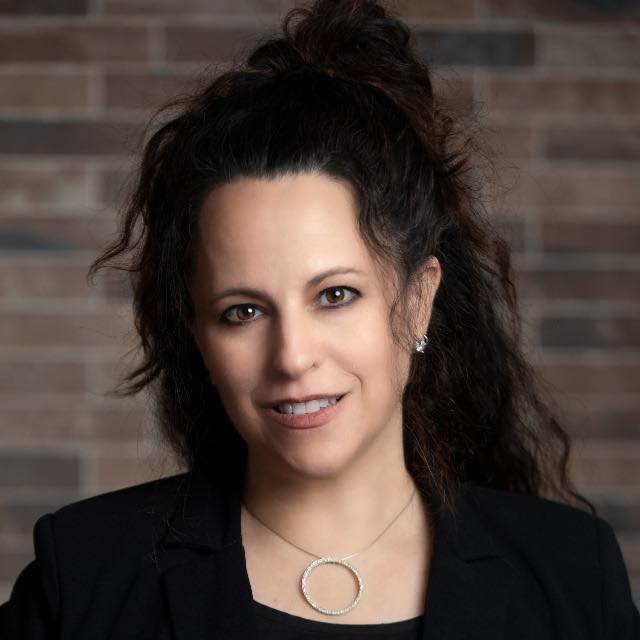
A Facebook post from 17 January resonated with me and I offer it to you for your reflection. It is still relevant today.
One of my kids (not mine, Sara’s) told me yesterday that sometimes “you can’t be like [Israeli philosopher and author] Micah Goodman and quietly think and see both sides. Sometimes you have to pick a side and stand with something”.
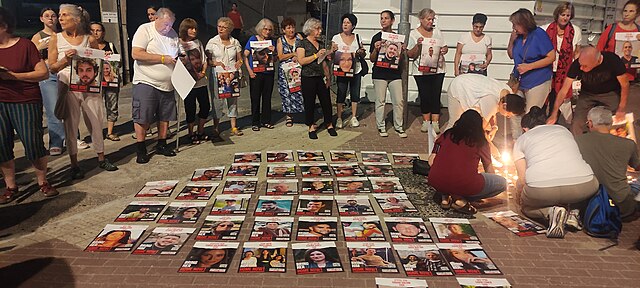
And I’ve been pondering that, and also crying a bit – unrelated to his comment: I’m beside myself with the injustice of our moment, and apprehensive about what our country will endure these next few weeks. I grew up around Holocaust survivors who were in camps for just over a year, and I know that it’s a lifetime of healing ahead for whoever we joyfully receive, not in a bag, at the Egyptian side of the border of hell.
Before you go on, let me tell you something about Sara K. Eisen and Micah Goodman.
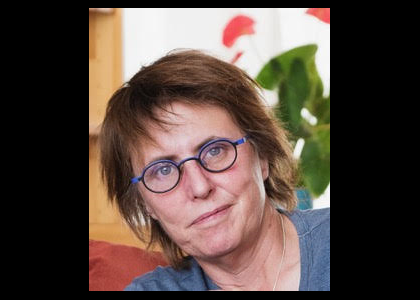
Putting together her Times of Israel Blogs bio and her Facebook page, we learn that Eisen is a veteran journalist, Director of Brand & Marketing at a high tech company. Also a mother, community activist, and mentor.
I only learned that after I read the FB post I appreciated enough to look her up, request FB friendship and ask her permission to publish her post as a guest author.
Mica Goodman is an award winning Israeli philosopher and author; Perhaps his best know book, translated into English in 2018, is ‘Catch-67: The Left, the Right, and the Legacy of the Six-Day War.’ He discusses the book in an article published in Fathom in 2019.
Anyway – here’s where I’ve arrived mentally:
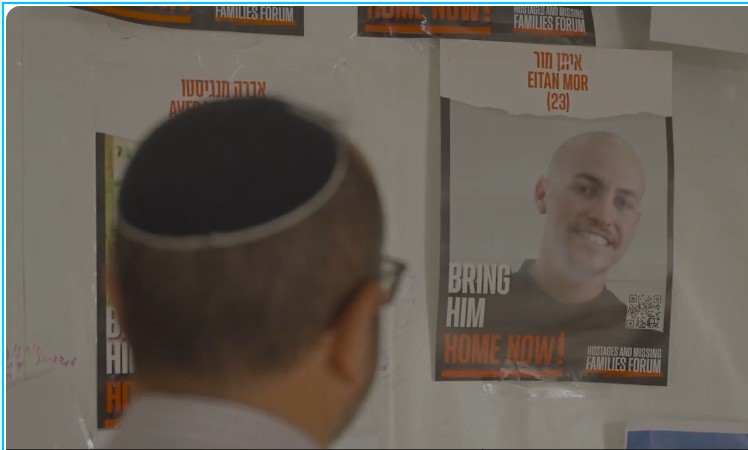
The Israeli debate surrounding a hostage deal has largely been framed as heart (mercy for our brothers and sisters) versus head (strategic and security implications of the deal down the road): Mercy vs Justice.
It has also been framed as saving lives we know about now versus lives we will pay for later, short term versus the long term unity and health of our nation.
And… a host of more cynical, political frames surrounding the Prime Minister, his coalition, his opposition, and our allies.
What’s missing for me is the conversation around global implications, and around the concept of Kiddush Hashem, sanctifying God’s name.
For me this story is not about Israel alone. It is about what happens when the world’s bad actors learn that all they need to do is hide among civilians and/or kidnap some people, frame their grievance as oppression and their victims as somehow tied to that oppression, and then…get away with tearing down civilization. This process has already begun: The pharma CEO shooting and the left’s celebration of the shooter, the UK grooming gangs and the refusal to confront them for fear of seeming racist. We ignore the parallels between these cases at our peril.
Some see kiddush Hashem as, simply, outright winning. My view is a bit more nuanced, although, frankly, I wish that that is what had happened.
I see kiddush Hashem – sanctifying the name of God- as having Israel and the Jews exemplify the balance between caring about individual lives – everyone is a world – and being willing to sacrifice for a greater story, for the enduring people of Israel, and for the enduring good of a world where creative energy, intellectual pursuits, human rights, and freedom are top priorities.
The people for whom liberty and a greater, God-driven story, for whom heroism is not dead, for whom cowardice is not an option, for whom meaning is in family and community and culture and discovery – these are the people who I see as fellow travelers and allies.
So then we ask: at what cost? When does having this larger story and willingness to sacrifice slide over into that “love of death on the altar of ideology” we attribute to our enemies? And the answer is to look at the results. Look at where there is human flourishing, and where there is mostly human suffering. If one is not afraid to be labeled a racist for simply seeing truth and data, the answer is clear.
Anyway. I believe this is why we had to do this terrible deal. Because it sits on the edge of love of life versus the larger story, and there was no real choice.
And yet – I worry terribly about the global implications of terrorists and morally broken relativists only seeing the upside as long as they [Israel’s enemies] cry about oppression, do nothing to make the world better and everything to prey on western weakness.
Maybe the kiddush Hashem – the sanctification of God’s name – is in the struggle, the struggle to have both voices strongly echoing through our people. The courage to be unsure and still move ahead.
Where I stand is full of rage against the injustice, and also full of humility before the mercy of saving lives, even if I believe the cost is too high.
By the way: Even if Israel and the Jews manage to beat the demonic beast we saw emerge on October 7, I do not have high hopes for the West unless it fully emerges from its slumber.
I was hoping Israel would have been allowed to lead the way to help slay this beast of hateful destruction and shameless lies, and I’ll bet there are many Palestinians who had hoped for that too; but short, digitally poisoned western attention spans and, yes, monetary interests (Qatar!), tend to cloud moral judgment.
We have to hope for the best, but I am not terribly optimistic. I hope I am wrong.
hostage deal hostages-for-terrorists Sara Eisen
Last modified: March 10, 2025