It does not help when Israeli journalists publishing in Israeli websites do not provide reliable information upon which readers can build an understanding of the context relevant to their articles. I am referring here to the anticipated approval of construction permits for Arabs residing in legal Arab villages within Area C that is now in the news.
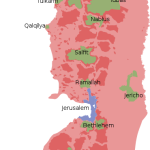
Readers can likely not fully appreciate the situation because the division of land and responsibilities between Israel and the PA is not understood by many. I recently published an article (here) making sense of the confusing, seemingly irrational and untenable situation. The main point to understand is how in Area C, Israel has total control of the land, but the daily lives of the Palestinian Arabs living in the few legal villages in Area C are run by the Palestinian Authority (PA). Total control of the LAND means that Israel and not the PA are responsible for issuing building permits in Area C (and only in Area C).
Yesterday, David Israel reported in the Jewish Press that the body that can approve construction in Area C, the Civil Administration Approval Committee, postponed their session to an undetermined future time. This means that neither Jewish nor Arab permits will be considered for approval at this sensitive time (sensitive for the new coalition government, that is). In his report, two points raised my eyebrows: Firstly, he was not careful with language and, in this day of propaganda warfare, language is of utmost importance. He wrote:
The Civil Administration was established in 1981, to carry out practical bureaucratic functions within the captured territories.
The term “captured territories” is exactly what anti-Zionists would write. Need we repeat for Israeli reporters ad nauseum that these are not “captured territories” but at the very least “re-captured land” that had been under Jordanian occupation between 1948 and 1967? Of course, I would prefer for the author to use the term “liberated land” but I would not have objected too much to “re-captured”. Even that is not precise because Israel never “captured” the land. It was always ours, just that it gained international recognition as such at the San Remo conference and League of Nations establishment of the British Mandate of Palestine. But “captured territories” plays into the hands of our enemies.
Can We Trust the Writer’s Research?
Secondly, I would question the research reliability of an author who lifts a statement almost intact from somewhere else without citation. Knowing where the writer got information that is not common knowledge is important for readers to be able to assess the weight they can attach to that information.
I was unfamiliar with the village about which he wrote — Khirbet Beit Zakariyyah — so I Googled it. I noticed how what David Israel wrote about the village was exactly the same as the Wikipedia entry and I do not think Israel was the contributor who wrote the latter. Here is Israel’s statement:
Khirbet Beit Zakariyyah is a small Arab village in Area C, perched on a hill that rises about 995 metres above sea level. It is located in between the larger Israeli settlements of Alon Shevut and Rosh Tzurim in the Gush Etzion region.
And here is the Wikipedia entry:
Khirbet Beit Zakariyyah (variants: Beit Iskâria, Khirbet Zakariah, Beit Skâria) is a small Palestinian village in the West Bank, perched on a hill that rises about 995 metres (3,264 ft) above sea level. It is located in between the larger Israeli settlements of Alon Shevut and Rosh Tzurim in the Gush Etzion region.
Israel follows up that statement with:
So this could explain why the permits for Arab settlements in Area C have been postponed.
Had he read the Wikipedia article to the end, he may have actually found the explanation for “this” because the mere fact that the village lies between two Jewish towns in Gush Etzion does not explain anything. Here is what Wikipedia wrote:
On January 14, 1948, Arab forces led by Abd al-Qadir al-Husayni attempted to capture the strategic hill of Beit Zakariah, and thus to split Gush Etzion into two in preparation for its total conquest. However, Jewish forces defeated them in the Battle of 3 Shevat. The defeat had strategic implications for all of Palestine – as a result, Husseini cancelled his plans to attack Jewish communities, and focused on attacks on the roads.
This clarifies the strategic value of this Arab village and why Interior Minister Ayelet Shaked asked the Approval Committee to re-examine their plans to grant permits there as Israel noted earlier in his article. In fact, the strategic value of all Jewish towns and communities in Area C is clear from this statement (in addition to the fact that they are built on ancient Jewish land and there were Jewish communities there pre-1948).
Paying attention, we notice that, according to the quote from Wikipedia, the Arab forces “attempted to capture the strategic hill of Beit Zakariah”. There is no mention of an Arab town and the name “Beit Zakariah” is a Hebrew name. In fact, Beit Zakariah was populated by Jews in ancient times. You can find it on the map of ancient Jewish settlements, describing it as a place where Judah HaMaccabi was defeated (when searching the map in English, use the spelling Bet Zekharya. By the way, the Arab name, Khirbat Bet Zakariah means “On the ruins of” Beit Zakariyyah).
Since Wikipedia is not a source of information that is respected by those who understand how the articles are put together, I can imagine that Israel was not happy to cite that as his source. In this case, he could have better disguised the fact by actually re-wording the sentence so it was unrecognizable rather than obvious cut-and-paste.
I have not had reason to doubt David Israel’s reliability in the past and I do not think it will prevent me from reading his articles in future, but it does show that more care must be taken when writing articles: care about use of language and care not to take short-cuts. The Israeli press has an almost insurmountable challenge in fighting the propaganda against our nation and needs to be sure it is not adding more fuel to the fires of hate.
anti-Israel propaganda critique of Israeli news article the Israeli press
Last modified: December 11, 2025